The Numbers Don’t Lie, But the Design Tells a Better Story
Let’s start where the culture-watchers always want to start: with money. Sabrina Carpenter’s Short n’ Sweet Tour, which launched in October 2024 and continued through 2025, has already grossed over $165 million according to Pollstar live music industry data and touring reports. Yes, that’s a striking number for a female artist under 30, and yes, it confirms what we already knew about where Carpenter sits in the cultural moment right now. But the gross revenue isn’t what keeps me thinking about this tour. What keeps me thinking about it is the stage.
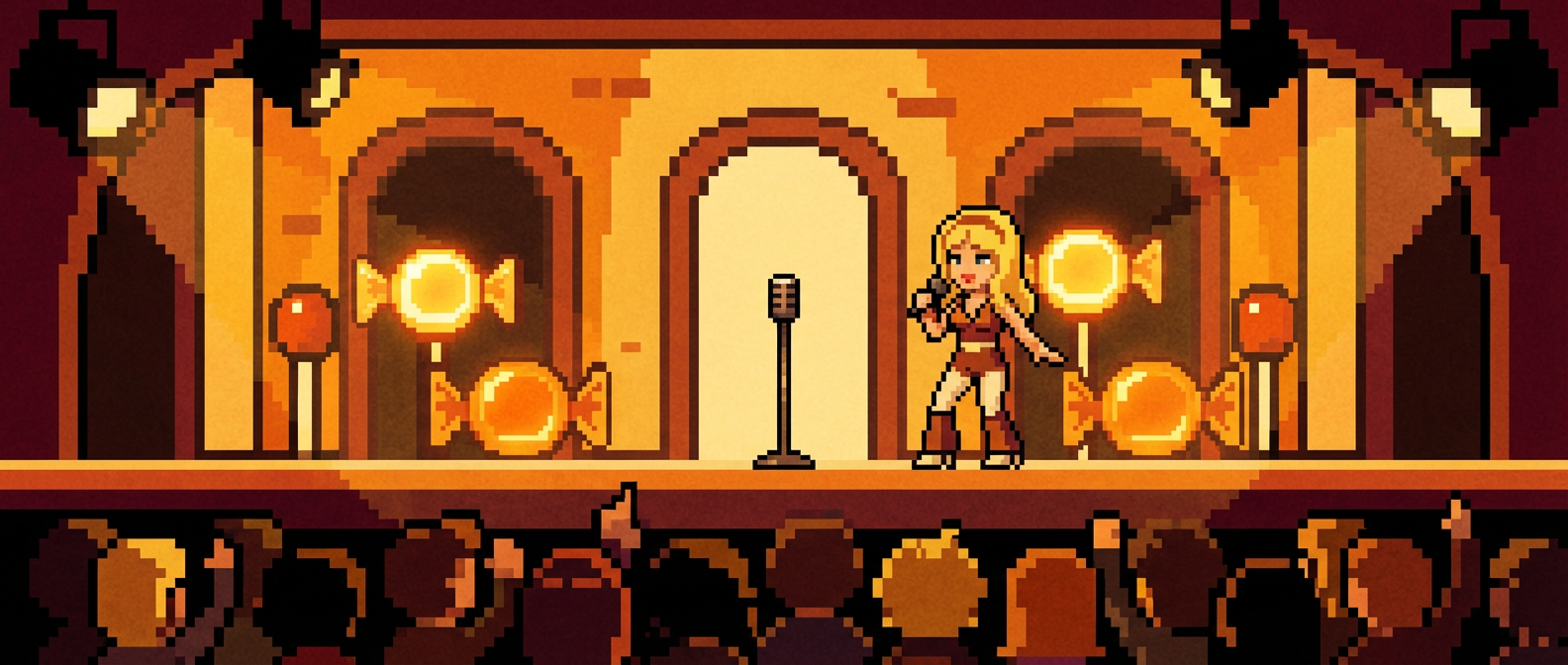
The set design isn’t just the backdrop to the concert. It is the concert. That distinction is exactly why we should talk about it with the same seriousness we’d bring to a retrospective at MoMA or a major gallery show. Not hyperbole. Just the baseline reality of how visual culture moves now.
A 60-Foot Confession: When Dessert Becomes Philosophical Statement
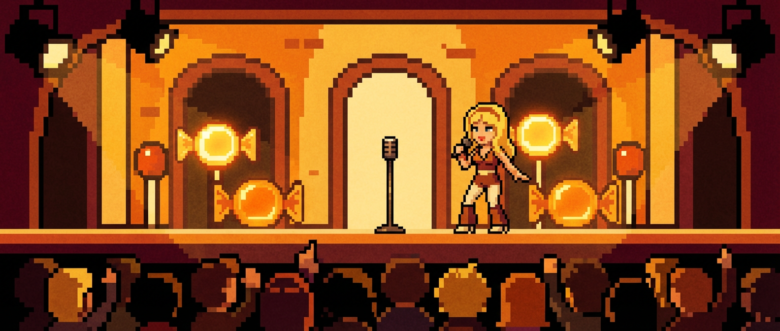
Production designer Willo Perron, the mind behind Beyoncé and Jay-Z’s stage worlds, created something genuinely audacious here: a rotating 60-foot dessert-themed proscenium that rejects almost every rule of contemporary pop design. If you’ve spent the last decade watching concert visuals trend toward minimalism, toward the Instagram-friendly aesthetic of moody lighting and sparse geometry, this design feels like a deliberate provocation. Maximalism with a point of view.
Critics have invoked Leigh Bowery’s early performance art practice when discussing the visual language Perron constructed, and that comparison earns its keep. Bowery’s work was about spectacle as vulnerability, about using costume and environment to create conversations rather than just visual consumption. The dessert motif, which could have curdled into pure kitsch in less thoughtful hands, instead becomes a metaphor: sweetness as intellectual framework, indulgence as feminist reclamation, the pleasure principle as something worth defending in a cultural moment obsessed with moral purity.
The proscenium rotates. That matters. It denies the audience a fixed point of view. You cannot sit back and consume this design passively. The stage architecture demands that you move your gaze, adjust your perspective, stay engaged in the spatial relationship between your body and the work.
The Vogue Thesis: Camp Femininity as Radical Act
A January 2025 profile in Vogue crystallized what had been floating around in the discourse without full articulation: this tour is advancing what we might call a “camp femininity thesis.” The piece drew explicit connections to John Waters’ aesthetic framework and the saturated color palettes of 1950s Technicolor cinema design. Strange reference points for a 2025 pop tour? Yes. That strangeness is the entire point.
What Vogue was identifying, and what deserves continued interrogation, is that Carpenter’s tour design resists the neutering of femininity that has become standard in mainstream pop. We’ve watched for years as female pop stars have been quietly encouraged to strip away “girly” aesthetics, to prove their sophistication through visual restraint, to adopt the minimalist grammar of male artists as proof they take themselves seriously. Carpenter’s design does the opposite. It doubles down on the visual language of feminine pleasure. It makes pink and frosting and sweetness into a deliberate aesthetic choice, a camp sensibility that is fully self-aware and intellectually rigorous.
Camp, in the Susan Sontag framework, is about style triumphing over content. But here, the style is the content. The design isn’t supporting a narrative. The design IS the narrative.
The Costume Budget as Cultural Index
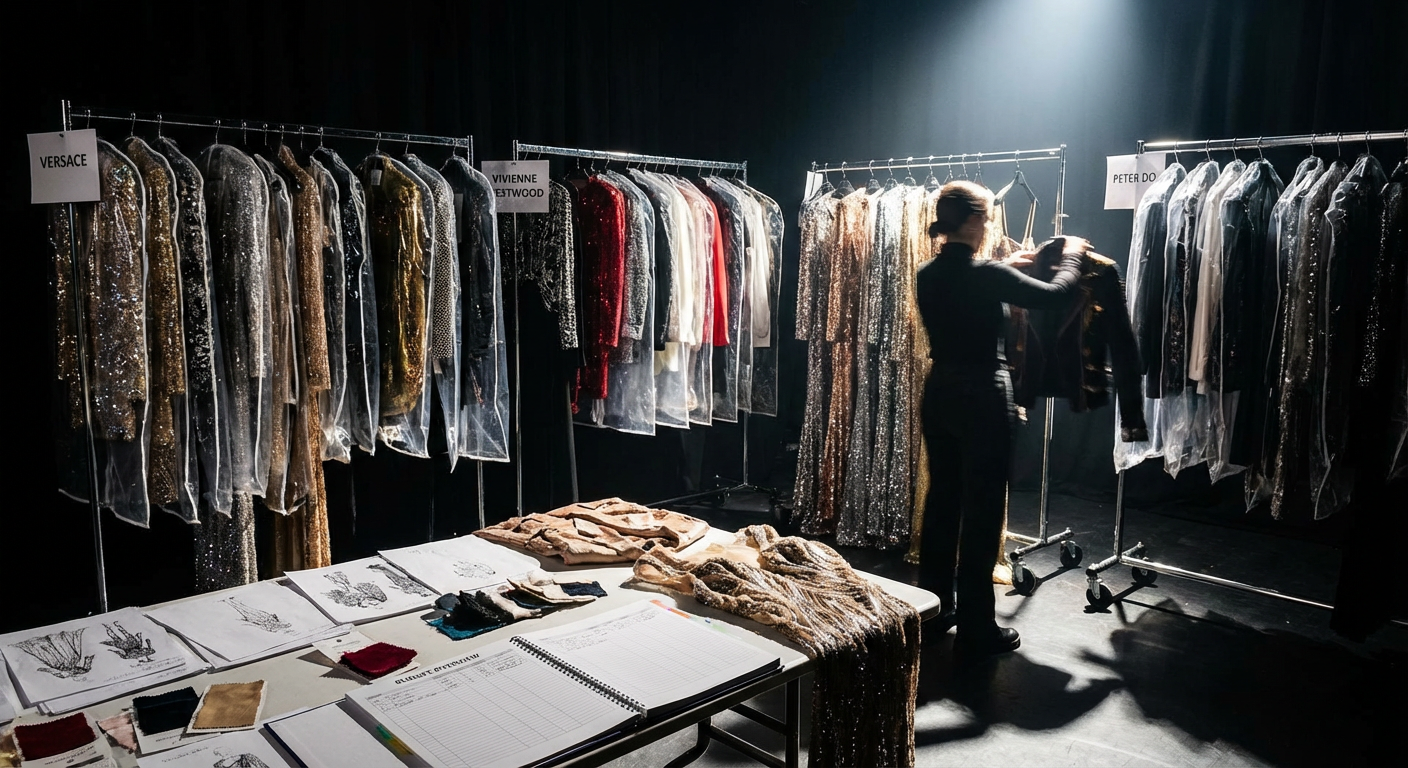
Consider the costume investment: $2.3 million, according to Billboard’s production breakdown reporting. That figure isn’t just about fabric and labor. It’s a statement about what touring artists believe their visual presence is worth. The pieces span Versace, Vivienne Westwood, and emerging designer Peter Do, which is a conversation between fashion history (Westwood’s punk lineage), contemporary luxury (Versace’s maximalism), and the next generation of design innovation (Do’s architectural precision).
The costume strategy reflects the larger design philosophy: nothing is incidental. Every element participates in a larger visual argument about what pop stardom can look like when it refuses to play it safe.
Recognition From Unexpected Quarters Changes Everything
In February 2025, the Art Directors Guild awards and nominations gave a special citation to the Short n’ Sweet Tour’s live production design team. This matters not because the ADG is more credible than any other body, but because it signals that the institutional structures of film and television design are acknowledging that pop concert design has moved into new territory. The ADG has historically focused on cinema and television. Concert design was peripheral to their mission. Not anymore.
That citation is institutional legitimacy for something fans already understood: this tour design deserves to be studied alongside stage design history, film production design, and conceptual art. It will influence what comes next.
An Invitation, Not a Conclusion
What makes the Short n’ Sweet Tour design matter, finally, is that it demonstrates something we need to see more of: commercial pop culture and visual rigor in the same frame, without compromise. You don’t have to choose between accessibility and intelligence. You don’t have to choose between pleasure and substance. Willo Perron’s design choices prove that the most interesting work right now lives precisely in that tension.
If you haven’t spent time thinking seriously about concert design, about what stages can communicate, about how visual language shapes the way we experience music and community, this tour is a remarkable entry point. Come ready to have opinions. Come ready to argue. Come ready to understand why this matters.