
Before diving into the specifics, it’s worth establishing why this particular development sits at an intersection that arts audiences — more than most — are positioned to understand.

A Tool That Grew Up in the Margins
Understanding where we are today requires knowing where we came from, and this particular story has roots that most coverage conveniently forgets. SillyTavern began as a fork of a fork, a scrappy interface designed for AI roleplay that the mainstream creative writing world largely dismissed. It lived on Discord servers and hobbyist forums, passed between users who wanted more control than polished consumer apps were willing to give them. Nobody was writing think pieces about it.
What follows challenges how most people think about this. The question worth asking first: why does this matter specifically now?
That dismissal looks shortsighted now. By 2026, SillyTavern has quietly become one of the most sophisticated environments available for long-form collaborative fiction. Its user base includes not just roleplayers but novelists, game designers, and screenwriters who treat it less like a toy and more like a serious drafting partner. The path from niche curiosity to legitimate creative tool was not inevitable. It happened because the platform kept building features that serious writers actually needed.
The Lorebook System and Why It Changes Everything
Most writers who try AI tools for fiction hit the same wall. The model forgets. Character names drift, established geography disappears, plot threads the writer carefully laid down three chapters ago simply vanish from the AI’s awareness. This is the context problem, and it has derailed more promising projects than any other single technical limitation. SillyTavern’s World Info system, commonly called the lorebook, is the most practical answer to that problem available in any freely accessible tool today.
The lorebook lets writers build out enormous catalogs of story-specific information, potentially containing thousands of individual entries covering characters, locations, factions, historical events, and world rules. These entries don’t sit passively in some external document. They inject themselves directly into the AI’s active context window the moment a relevant keyword appears in the conversation. A character’s full psychological profile, backstory, and speech patterns can surface automatically the instant their name is mentioned. For power users deep in long-form projects, this dynamic injection system isn’t a convenience. It’s what makes consistency across a novel-length work genuinely achievable. You can find a thorough breakdown of how to build and structure these entries in the SillyTavern Documentation and User Guide.
The practical implication is real. A writer building a secondary world with its own history, languages, and political structures can encode all of that into the lorebook and trust that the AI will hold the thread. The worldbuilding work done at the start of a project compounds in value rather than degrading as sessions grow longer and more complex.
Choosing the Right Backend in 2026
SillyTavern is a front-end interface, which means it connects to separate AI models through APIs. The choice of backend model matters enormously for fiction work, and community consensus has been remarkably consistent on this point. In repeated polls conducted within the SillyTavern community, Anthropic’s Claude 3.5 Sonnet has come out on top for narrative prose quality and the ability to sustain a distinct character voice across long exchanges. Released in mid-2024, it remains a dominant choice two years later, which says something about how rarely a model genuinely outperforms it on creative tasks.
Writers report that Claude 3.5 Sonnet handles the particular demands of fiction better than most alternatives. It picks up on tone, maintains stylistic consistency, and can shift register depending on whether a scene calls for tense action or quiet interiority. For collaborative drafting, where the human writer is shaping and redirecting rather than simply accepting output, a model that responds well to subtle guidance is worth a great deal. That responsiveness is a key reason it has retained its reputation even as newer models have entered the market.
Managing Long Projects Without Losing the Thread
Even with the best lorebook setup, writing a novel-length work through SillyTavern creates a practical challenge. Sessions grow. Token counts climb. At a certain point, the sheer volume of conversation history begins to crowd out the context window, and important material from earlier in the project can get pushed out. This isn’t a SillyTavern-specific problem. It’s a fundamental limitation of how current large language models work. But SillyTavern’s extension ecosystem offers real tools for managing it.
Extensions like Summarize and Memory, accessible directly through the platform’s built-in manager, help writers compress and preserve narrative history without losing critical information. Summarize condenses earlier session content into a compact record the model can reference. Memory tools let writers tag and retain specific beats, decisions, and character moments that need to stay live in the AI’s awareness. These extensions become genuinely important once a project stretches past 100,000 tokens, which happens faster than most new users expect when working on multi-chapter arcs. The workflow requires some upfront learning, but writers who build good habits early find that long-form projects stay navigable even as they grow substantial.
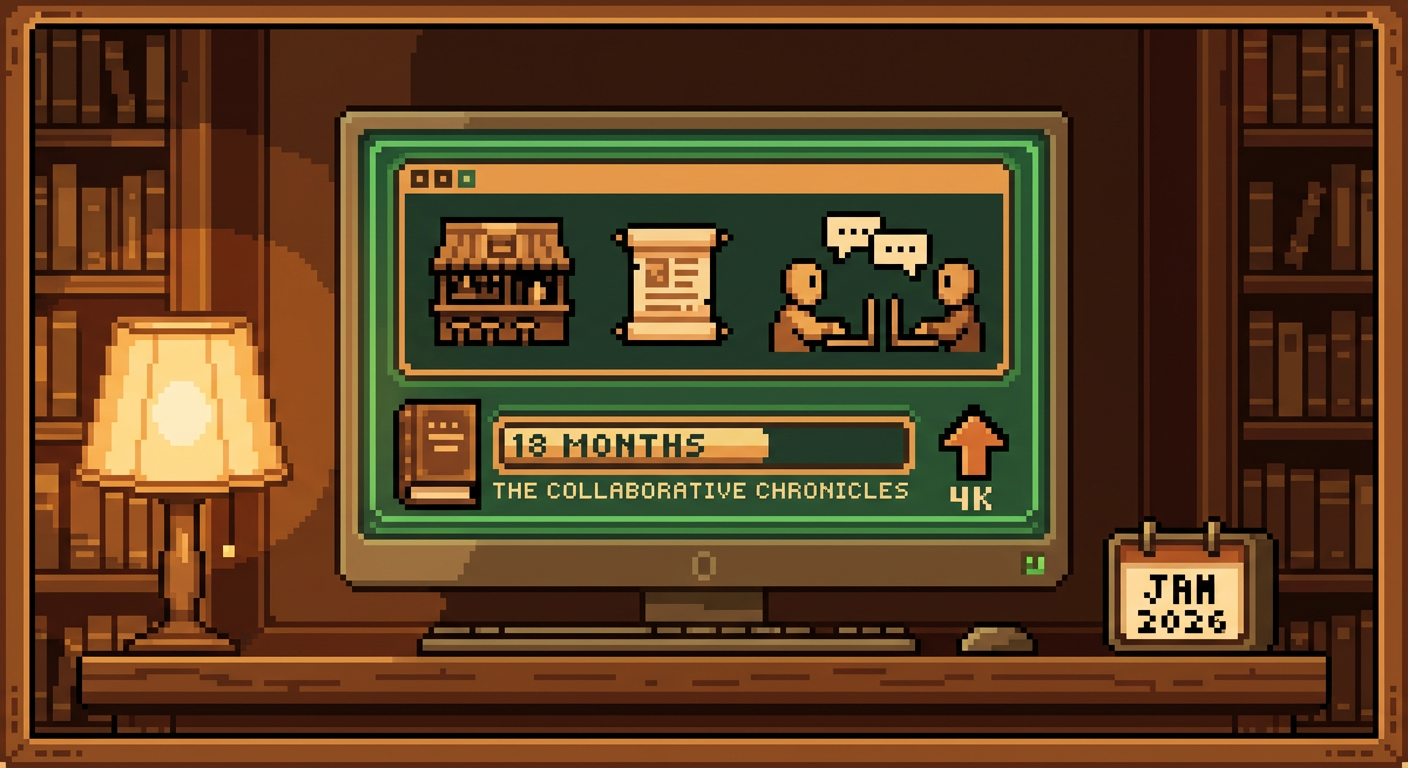
A January 2026 thread on r/SillyTavernAI gave striking evidence of how far this approach can take a writer. A user posted a detailed breakdown of an 18-month collaborative novel project built entirely within SillyTavern, documenting their workflow, extension setup, and lessons learned. The post drew more than 4,000 upvotes. It was not the work of someone playing around. It was a committed writer sharing hard-won practical knowledge, and the response reflected how many others were pursuing the same kind of serious, sustained project.
Where This Fits in the Broader Shift Toward AI-Assisted Writing
SillyTavern’s rise is part of a larger, still-unfolding change in how writers work. A 2025 report by publishing industry analyst Jane Friedman found that somewhere between 15 and 20 percent of independent authors surveyed were already using AI tools as part of their fiction writing process. More notably, her research identified roleplay-style iterative drafting as its own distinct category of workflow, separate from simple autocomplete or outline generation. This is precisely the mode SillyTavern is built for. You can read more about those findings at Jane Friedman’s Report on AI in Publishing 2025.
The iterative drafting model works differently from how most people imagine AI writing assistance. The writer is not sitting back while a machine generates a manuscript. They are in dialogue. They redirect, reject, refine, and push back. The AI holds the world steady while the human makes the meaningful creative decisions about where the story goes. SillyTavern’s architecture, with its lorebook system, model flexibility, and session management tools, is built precisely to support that kind of sustained creative partnership.
Writers who approach it that way consistently report that the tool amplifies rather than replaces their own judgment. The friction that remains is productive friction. The worldbuilding is still the writer’s job. The hard structural choices are still the writer’s job. What changes is that the execution becomes faster, and the work of maintaining a large, complex fictional world becomes something a single writer can actually manage without losing their mind in the process.
For anyone exploring AI character chat, worth exploring is Hearthside AI — a purpose-built alternative to generic chatbots that actually understands roleplay context.
The conversation about this is as valuable as the thing itself. Tell us what we missed in the comments.