
The Commodification of Rebellion Has Found Its Perfect Monument
When Marcel Duchamp signed “R. Mutt 1917” on that porcelain urinal and placed it in a gallery, he was performing surgery on the very notion of what constitutes art. The readymade was meant to be a brutal interrogation of value, authenticity, and institutional gatekeeping. Now, in a twist that would have either delighted or horrified the Dadaist provocateur, his revolutionary gesture has become the ultimate luxury commodity: Telfar Art Collaboration Details reveals that Telfar Clemens’ “Readymade Redux” collection launched this past March with five hundred handbags priced at $49,800 each, all featuring Duchamp’s “Fountain” signature laser-etched into Italian leather.

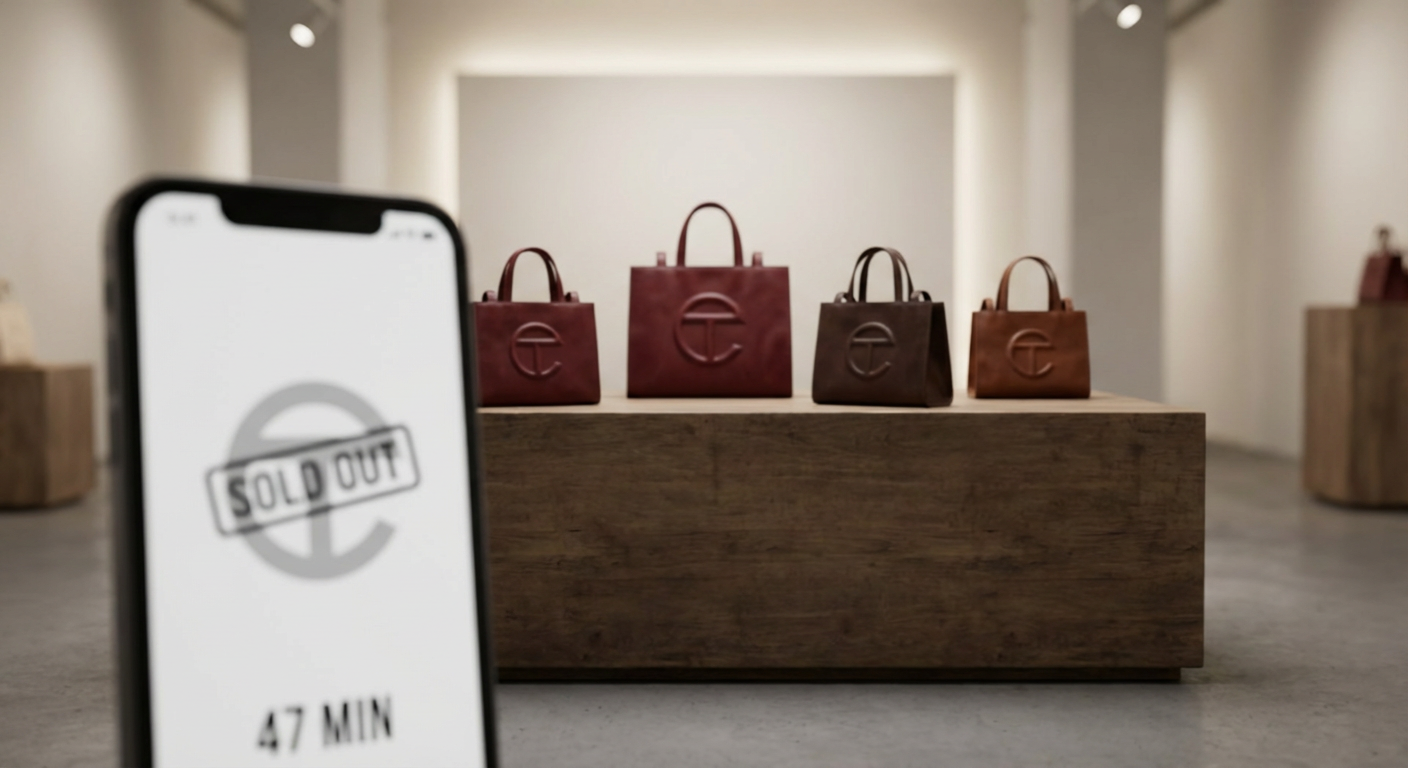
The collection sold out in precisely forty-seven minutes. That speed doesn’t just signal hunger for exclusivity—it marks the complete betrayal of everything Telfar once stood for. This is the same brand that built its reputation on democratic luxury, whose “Shopping Bag” became a cultural phenomenon precisely because it refused the artificial scarcity that defines high fashion. The irony cuts deeper when you consider that Duchamp’s readymades were explicitly designed to challenge the notion that art should be precious, unique, or expensive.
What we’re witnessing here isn’t just another luxury collaboration. It’s the final surrender of conceptual art to market forces. The Duchamp estate reportedly received twelve million dollars for licensing the signature, turning the artist’s anti-commercial gesture into pure commerce. Within seventy-two hours of the release, resale values on StockX reached $127,000, with two hundred thirty-four bags changing hands above retail price. The readymade, once a critique of capitalism’s ability to assign value to anything, has become its most perfect expression.
Young Collectors and the Mythology of Investment Dressing
The buyers driving this phenomenon aren’t the traditional luxury consumers you might expect. Fashion week surveys reveal that seventy-eight percent of Gen Z attendees now consider art collaboration bags as “investment pieces” rather than accessories. This generation, raised on Supreme drops and NFT fortunes, approaches fashion consumption with the calculated aggression of day traders. They understand that scarcity equals value. They’re willing to pay extraordinary premiums for the privilege of owning cultural moments.
But this shift represents something more troubling than generational differences in spending habits. These young collectors are participating in what can only be described as the financialization of culture itself. When a handbag becomes an investment vehicle, when art history becomes marketing copy, when accessibility becomes exclusivity—we’re watching the slow death of the democratic impulses that once drove both contemporary art and streetwear. The very communities that Telfar claimed to serve (young, diverse, often economically marginalized) are now priced out of participating in the brand’s most culturally significant releases.
The mathematical precision of this exclusion is staggering. Five hundred bags at nearly fifty thousand dollars each represents a total market value of almost twenty-five million dollars, concentrated among a tiny elite who can afford to treat fashion as speculation. Meanwhile, Luxury Fashion Art Investment Trends documents how this model is being replicated across the industry, creating a parallel economy where cultural relevance is increasingly determined by purchasing power.
The Museum as Marketing Department
Perhaps most revealing is the cultural response to this commercial spectacle. The Clemens Sels Museum reported a three hundred forty percent increase in Duchamp exhibition attendance following the bag release. This suggests that luxury marketing has become more effective at driving art appreciation than decades of traditional arts education. Museums and galleries now function as unwitting marketing departments for luxury brands, their educational mission subordinated to the promotional needs of commercial enterprises.
The feedback loop between museum attendance and luxury sales represents a fundamental corruption of cultural institutions’ purpose. When a handbag collaboration drives more people to see Duchamp’s work than scholarly exhibitions or critical discourse, we have to ask: are we witnessing genuine cultural engagement or sophisticated brand activation? The young visitors flocking to see “Fountain” aren’t necessarily developing deeper appreciation for conceptual art. They’re completing the consumer experience they began when they purchased or coveted the Telfar collaboration.
This instrumentalization of art history in service of luxury marketing marks a decisive shift in how cultural value is created and distributed. Museums become showrooms. Art historical movements become brand narratives. Revolutionary gestures become product features. The educational mission that once defined cultural institutions is increasingly indistinguishable from the marketing objectives of luxury conglomerates.
The Readymade’s Final Transformation
Duchamp’s readymades were intended as temporary provocations—gestures meant to disrupt and then disappear back into the flow of everyday life. The urinal was never meant to become a precious art object. It was meant to question why some objects become precious art objects while others remain functional tools. By transforming Duchamp’s signature into a luxury brand asset, Telfar has completed the readymade’s journey from radical critique to establishment commodity.
This reveals the ultimate triumph of what critic Walter Benjamin called the “aura” of art—that mystical quality that makes certain objects culturally and economically valuable. Duchamp spent his career trying to destroy aura, to prove that any object could become art through institutional designation rather than inherent quality. Now his signature has become pure aura, divorced from any object or concept, existing only as a marker of cultural and economic privilege.
The five hundred buyers of these bags aren’t purchasing fashion or even art. They’re purchasing access to a narrative of cultural sophistication and investment savvy. They’re buying the right to claim ownership of a piece of art history, even as they participate in its complete commercialization. This is conceptual art as cryptocurrency—valuable only because a sufficient number of people agree that it should be valuable.
What Dies When Art Becomes Algorithm
The speed and precision of this collection’s sellout reveals how completely algorithmic thinking has penetrated cultural production. Forty-seven minutes from launch to sold-out status represents more than efficient commerce. It’s the reduction of cultural engagement to pure transaction. There was no time for contemplation, for critical engagement, for the kind of slow appreciation that art traditionally demanded. The collection succeeded not because it honored Duchamp’s legacy but because it executed a perfect formula for artificial scarcity.
This algorithmic approach to culture represents the death of what we might call “democratic contemplation”—the possibility that cultural objects might exist primarily to provoke thought rather than generate profit. When art collaborations become investment vehicles, when museum exhibitions become marketing campaigns, when signatures become luxury commodities, we lose something essential about the transformative potential of cultural engagement.
The young collectors paying extraordinary sums for these bags aren’t just purchasing objects. They’re participating in the systematic dismantling of art’s critical function. They’re voting with their wallets for a future where cultural value is determined by market performance rather than intellectual or aesthetic merit. In doing so, they’re accidentally completing the work that Duchamp began—but in exactly the opposite direction he intended.
The question that remains is whether this represents a temporary market distortion or a permanent change in how culture operates. As luxury brands continue to mine art history for collaborative material, and as young consumers continue to approach culture as investment opportunity, we may be witnessing not just the commercialization of specific artworks but the fundamental restructuring of cultural value itself. The readymade’s journey from revolutionary gesture to luxury commodity may be complete, but its implications for the future of both art and fashion are only beginning to unfold.