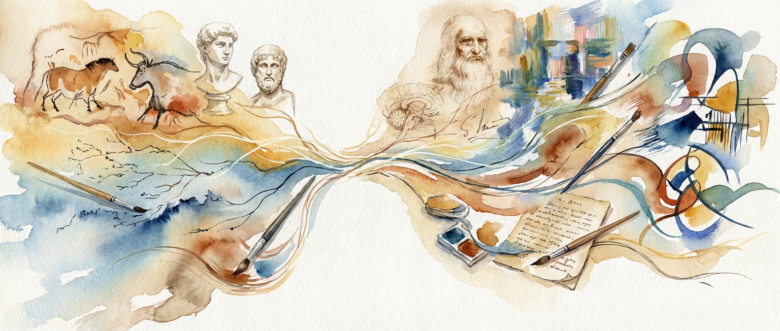
The Bloomian Shadow: When Predecessors Become Prison Walls
Harold Bloom’s theory of the anxiety of influence, originally conceived for poets, hits differently when you apply it to other art forms. Think about the crushing weight Jackson Pollock felt from Picasso, or how Godard both worshipped and tore apart the Hollywood masters he studied obsessively at the Cinémathèque Française. This relationship between artistic forebears and their inheritors is both creative fuel and paralyzing burden. It reveals itself most clearly when we examine artists who have successfully wrestled with their influences rather than just giving up.
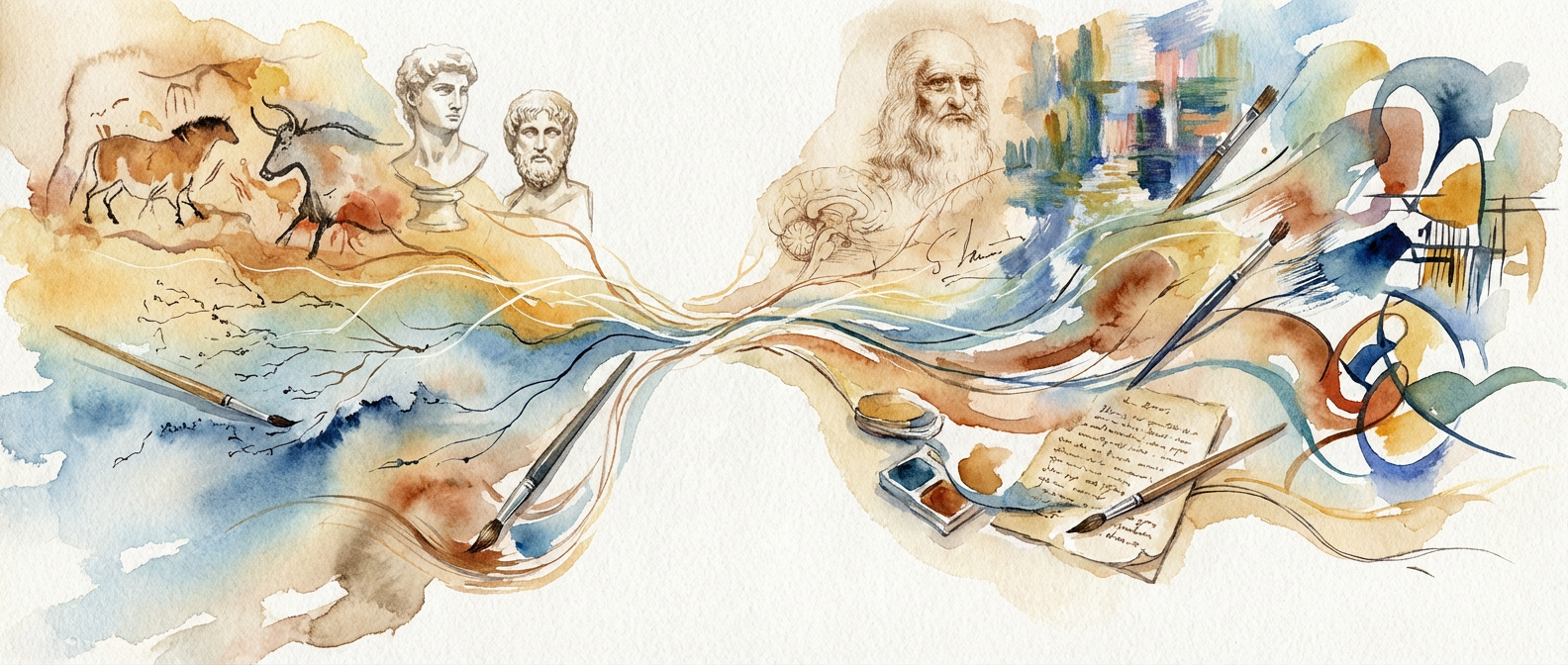
Take Cindy Sherman’s relationship to both classical portraiture and Hollywood glamour photography. Her “Untitled Film Stills” series doesn’t simply reference these traditions. It performs a kind of surgical dissection, exposing the constructed nature of feminine identity while acknowledging the visual power of the very imagery she critiques. Sherman’s genius lies not in rejecting her influences but in making them perform new work, forcing viewers to see the artifice that was always there. This is influence as productive tension rather than slavish devotion.
Yet the art world’s obsession with lineage often reduces complex creative relationships to simple family trees. Critics love to trace clean lines from Cézanne to Picasso to de Kooning, as if artistic development followed some neat hereditary pattern. This reductive thinking obscures the messier reality of how artists actually absorb, reject, and transform their influences. It creates a mythology that better serves institutional narratives than actual understanding of creative process.
Cross-Pollination and Contamination: When Influences Refuse Categories
The most compelling artistic developments happen when creators ignore the supposed boundaries between mediums, genres, and historical periods. David Lynch’s filmmaking owes as much to Francis Bacon’s paintings as it does to any cinematic predecessor, while Bacon himself drew inspiration from Sergei Eisenstein’s montage techniques and medical photography. These cross-contaminations produce work that feels genuinely unprecedented because it emerges from unexpected combinations rather than predictable progressions.
Consider how hip-hop fundamentally rewrote the rules of musical influence through sampling. When Public Enemy built “Fight the Power” around a James Brown loop, they weren’t simply paying homage. They were creating a new form of citation that made the original source material perform contemporary political work. This sampling aesthetic has since influenced visual artists like Richard Prince and Sherrie Levine, who apply similar strategies of appropriation and recontextualization to photography and painting. The influence flows in multiple directions at once, creating webs rather than simple chains of artistic inheritance.
Jazz provides another model for productive influence that challenges linear thinking. When John Coltrane recorded “My Favorite Things,” he wasn’t covering Rodgers and Hammerstein so much as using their harmonic structure as raw material for something entirely different. Charlie Parker’s relationship to classical music, or Cecil Taylor’s to both European concert tradition and West African polyrhythms, shows how the most vital art emerges from collision rather than careful preservation. These artists understood that influence works best when it’s metabolized rather than mimicked.
The False Binary of Innovation Versus Tradition
Contemporary discourse around artistic influence often falls into a tiresome binary between radical innovation and respectful tradition, as if these were mutually exclusive approaches. This thinking produces both the shallow iconoclasm of artists who reject influence entirely and the sterile academicism of those who worship it. The most compelling work emerges from a third path: deep engagement with tradition that enables genuine transformation rather than mere rebellion or reverence.
Kehinde Wiley’s portraits exemplify this sophisticated approach to influence. His paintings directly reference classical European portraiture while inserting Black subjects into these historically white spaces. But Wiley’s work succeeds not simply because of this conceptual framework. It succeeds because he has mastered the technical vocabulary of his predecessors well enough to make it speak in new languages. The ornate backgrounds, the careful attention to fabric and flesh, the choreographed poses all demonstrate profound understanding of the traditions he’s both honoring and subverting.
Similarly, Ari Aster’s horror films reveal deep knowledge of genre conventions while pushing them toward genuinely unsettling new territory. “Midsommar” works precisely because Aster understands the grammar of both folk horror and domestic drama well enough to hybridize them effectively. His influences range from “The Wicker Man” to Bergman’s family studies, but the resulting work feels neither derivative nor artificially innovative. This is influence as active dialogue rather than passive absorption.
The Curatorial Moment: When Context Becomes Content
Museum exhibitions and film retrospectives increasingly function as arguments about artistic lineage, making curatorial decisions that shape how we understand creative relationships. When the Whitney Museum’s 2019 exhibition “Programmed: Rules, Codes, and Choreographies in Art, 1965–2018” placed Sol LeWitt’s instruction-based drawings alongside contemporary digital art, it wasn’t simply displaying objects. It was proposing a genealogy that connected conceptual art to algorithmic creativity. These curatorial interventions become part of the influence story themselves, creating new contexts that artists then respond to and work within.
The danger lies in exhibitions that impose false continuities for the sake of clean narratives. Too often, curators construct lineages that erase the messy realities of artistic development in favor of stories that support institutional agendas or market interests. When major museums trace neat lines from Abstract Expressionism to contemporary painting while ignoring the feminist artists, artists of color, and international voices that actually shaped contemporary practice, they perpetuate influence mythologies that serve established hierarchies rather than historical accuracy.
Yet at their best, these curatorial arguments can reveal genuinely illuminating connections and challenge received wisdom about artistic development. The 2016 exhibition “Dada Africa” at the Musée de l’Orangerie in Paris showed how African art influenced European avant-garde movements while also demonstrating how those same avant-garde techniques were being employed by African artists working in different contexts. Such exhibitions complicate simple influence narratives by revealing the multidirectional nature of artistic exchange.
Beyond Influence: Toward Artistic Ecology
Maybe it’s time to abandon the language of influence altogether in favor of something more ecological. Rather than thinking about artistic lineage as a series of one-way transmissions from master to student, we might consider how creative communities function as complex ecosystems where ideas, techniques, and sensibilities circulate in multiple directions at once. This ecological model better accounts for the collaborative nature of most artistic breakthroughs and the ways that supposedly minor figures often prove more significant than canonical masters.
The New York art scene of the 1960s demonstrates this ecological principle clearly. While art history often focuses on individual stars like Warhol and Pollock, the actual creative ferment emerged from dense networks of interaction between artists, writers, musicians, filmmakers, and dancers. Yvonne Rainer’s choreography influenced Robert Morris’s sculpture, which influenced Steve Reich’s compositions, which influenced experimental film. These weren’t simple influence relationships but complex feedback loops that generated new possibilities through constant circulation and recombination.
Understanding artistic development ecologically rather than genealogically opens space for more nuanced appreciation of how creativity actually works. It allows us to see influence as one force among many in complex systems that include economic pressures, technological changes, social movements, and pure accident. Most importantly, it suggests that the most vital artistic work emerges not from anxiety about predecessors but from active engagement with the full environment of contemporary creative possibility. What other hidden ecosystems might we discover if we looked beyond the obvious lineages that dominate our museums and histories?